

From [Dog] to [Dogma], the spelling grows by only two letters, but for Kim Ximya the distance took six years. The Cynic school, which took its name from the Greek word for dog, lived mocking the customs and authorities of the world. Borrowing that name, the Kim Ximya of the days when he aimed sharp words at the Korean hip-hop scene was close to a Cynic. Then, six years later, he put a word meaning doctrine on the cover of his album. The two words only look alike in spelling; their roots are different. And yet this album has no firm doctrine. He even wrote a music version of the ten commandments, modeled on the Danish directors’ “Dogma 95,” but said they were not rules he himself could agree with. There is only one rule he kept to the end: how much does this work reflect who I am right now.
But the Cynics were not people who only mocked convention. They sought to reach virtue through askēsis, a discipline of training oneself. Kim Ximya’s six years read the same way. The sword he once swung, powered by envy and jealousy, has gone back into its sheath, and its place has been filled by conversations with himself held while studying the Buddha’s philosophy, and by repetition he keeps up not because it is fun but even though it hurts. It is not that the sharp-tongued rapper became a completely different person; rather, he walked into the practice that the name “dog” had held from the start. Walking that road beside him were friends he has known for a long time: cjb95, ccr and Mount XLR.

So [Dogma] is not an album that hands you an answer. Released also as a silver player that cannot skip, what he wanted from it is an experience in which, at some point while the music plays, the music is erased and only the listener remains. The conversation below is a record that slowly follows the space in between, from dog to doctrine.
Q. I heard you didn’t look at the reactions in 2020, and you don’t this time either. Then have you listened to [Dogma] again from start to finish since the release?
Kim Ximya (hereafter Kim): No, I haven’t.
Q. Are you leaving it alone on purpose?
Kim: Back then it was a bit different from this time. The album came out quite a while after I finished it, so I deliberately didn’t listen. If I listened again, there were already parts that made me cringe a little.
With this album, I think it’ll be fine to listen again after a year or two, but as soon as it came out there were so many interviews and schedules that I never had the time to sit down and really listen in the first place.
Q. In the six years after [Dog] there were “FRIENDS GO FOE,” the EP [w18c], “WAY 2A HEAD” and [Bundle1.2]. Of the sounds on [Dogma], which was made the longest ago?
Kim: Probably the opening of “Zulu Love.” That one was made a really, really long time ago. It must be at least four or five years old.
Q. How did that track come about back then?
Kim: As I remember it, the front part of “Zulu Love” was a beat by my friend cjb95. It wasn’t made with anything in mind. It was “Want to try this?” “Sure,” and that’s how the track got made. So I never thought it would be used on the album, but the friends who made the album with me and the label both really wanted this one in, so it went on.
Q. It samples “Nature Boy.” How did the push to keep the sample come about?
Kim: Everyone loved it. I was actually on the side of taking it out, but nobody other than me wanted to take it out.
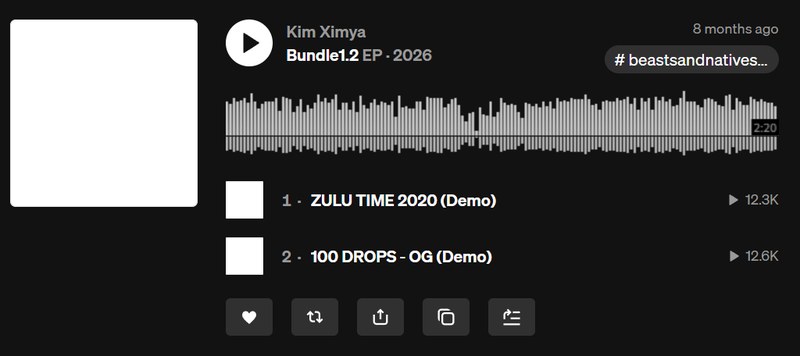
Q. In January this year you first put out the demos “ZULU TIME 2020” and “100 DROPS - OG” on SoundCloud. “100 DROPS” became “HDI.” Was there a reason you released them ahead of the album?
Kim: Those two tracks were a kind of message to people who prefer, say, [Moonshine] or hard rapping. In my own way I was saying, “An album like that isn’t coming anymore, so if you’re waiting for that, I’m sorry. Sorry, but give up.” Putting out the original version of “HDI” was also meant as, “This is the way I’m going from here, so please understand that.”
Q. On one broadcast you said you went as far as “can I really go this far?” and then pulled back. How far did you go before pulling back?
Kim: To me it felt very Burial-like. I wanted to strip the vocals out more, and I wanted to erase the feeling of a rap album much more.
But in the process, among the songs finished at the Europe camp, there were some the label really liked and wanted on the album. When I tried to build the tracklist with those songs, they didn’t fit the initial direction very well. So we revised it there and decided to go in a direction where the rhythm was more emphasized.
Q. “WAY 2A HEAD” was introduced as a single previewing the direction of the solo album, but it was left off the album. Was there a reason?
Kim: Originally there were more songs with a mood like “WAY 2A HEAD.” The tracks I did with Blawan had the same feel. But as we made it, the album arrived at the current version, and when it came time to fit those songs in somewhere, in my view there just wasn’t a place for them.
Maybe because they were songs made in one sitting with friends, it felt like there was no room for them. I still have the songs, so it’ll probably end up as something like using them in the next project.
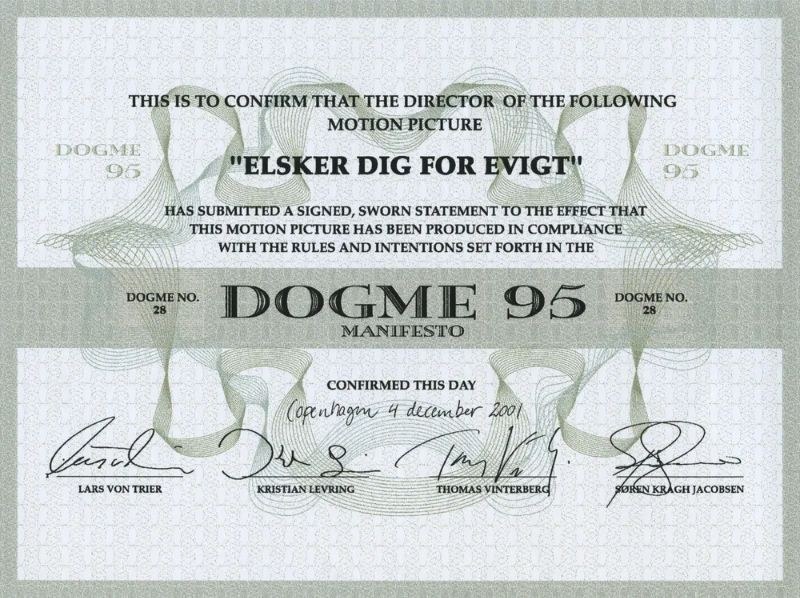
Q. The name “Dogma” reminded me of the Danish directors’ “Dogma 95” from 1995. They wrote ten rules first and shot films only within them. I’m curious whether you set rules while working, and whether you broke any along the way.
Kim: Actually, I made a music version of the Dogma 95 commandments. I made it thinking it would be fun to use somewhere while doing the [Dogma] album, but since it was a parody, I tried to change the original commandments as little as possible, so they weren’t rules I could agree with.
Still, there’s just one thing I keep no matter what. What I consider most important is how much this work reflects me.
Q. So it’s a question of sync.
Kim: Yes, that’s the question. Good or bad aside, I think there are creators whose work just doesn’t match who they are. They’ll have their reasons, but by my standard it’s hard for me to find that kind of work interesting. It feels closer to a product.
"Got anything you've made lately?"
Q. Around [Dog], in an interview with Hypebeast, you said you were in a crew called “Sector” with cjb95 (Jongbin) and ccr, and that you came together because you were huge fans of Simo & Moodschula. What drew you to that album, and how do you think it remains in the sound of the three of you today?
Kim: I don’t remember exactly how I felt back then, but that album, from its dark mood to the rap, had a feel where even now you could listen to it without thinking of it as a rap album.
I’ve only just realized it, but that’s also where I’m aiming now. Not sounding like a rap album. And all of it was so far ahead of its time. Also, since I heard it when I was young, I got into it much more deeply. So it’s always stayed with me.
Q. So it was a kind of shock.
Kim: I guess so. It wasn’t a typical rap style either.
Q. In the same interview you said you were proud to be in the position of introducing Simo to your friends, and six years later those friends made almost the whole of this album. What changed in between?
Kim: First, I think what I want to make has become much clearer. In the past, whatever style the music was, as long as it didn’t bother me, I think I felt it was fine because once I put my vocals on it, I’d already gotten across what I wanted to say.
So when I think about it, in the past I was making music but I kept talking. I kept talking and getting my thoughts across. Now it’s clear what kind of mood I want my music to have and in what direction I want to grow.
Q. Your friends must have built up that much experience too.
Kim: They all have such good taste, so when we want to do something, it starts like, “Got anything you’ve made lately?” “Got anything you’re not using lately?” Most of it sounds great when I listen, and the music each of them puts out sounds great too, so it’s definitely good.
Q. The Sector account is still up on SoundCloud. What did each of you do in the Sector days, and how did it carry on to now?
Kim: The Sector days were a time when there were a lot of online crews. We all got together a few times, but it felt mostly split into small groups of close friends. And I was already working with Jinsu hyung (FRNK). It was that kind of period, so we weren’t super close back then, and then we gradually got closer. Jongbin played a good role as the link.
I actually got close with Gwangjae (Mount XLR) when I started my alternative military service. Back then I went to Gwangjae’s studio really often. And since Jongbin runs a sound supply service, we started doing things together there, and whenever Jongbin does something, he always kindly reaches out to me. “Want to try this? Do something here for me,” and it carried on like that.
Q. Was there a reason you started going to Gwangjae’s studio so often?
Kim: Gwangjae was preparing an album at the time. I wanted to learn things like modular from him, and he was at a point where he wanted advice on this and that while making the album. I was doing my alternative service, so I was a bit bored, and musically I wasn’t doing anything. That’s when we got really close.
Q. Looking at the credits this time, you’re listed on five songs for composition and nine for arrangement. How were the songs with your name in the composition credits made?
Kim: It varies a lot. With “T-H-I-R-S-T-Y,” the very beginning of the song was a demo I wrote, and it was finished after passing through Oh Hyuk and then Gwangjae. For “Move My Feet,” the part before the variation was made with friends on Jeju Island, and for the back half I attached something I wrote after coming back to Seoul.
These days I find it fun to write songs and stockpile them first, then send them all out to friends or overseas producers and ask them to try arranging them, so I think that’s why I work that way.
Q. When you hand off an arrangement, do you tend to give freedom, or make specific requests?
Kim: I hardly say anything and just send it. I prefer that, but then the output can be all over the place, right? So I choose very carefully who to send it to, which producer. I trust that “this person does this kind of thing, so if I send this, they’ll do it like this,” and send it without a word.
Q. After you get the arrangement back, how do you take part?
Kim: Things like “I should join this song with that song,” or “I’ll just take out this one source here.” Structural parts, sound parts, details.
Q. cjb95, ccr, Mount XLR (Gwangjae). How do the three producers differ in style or in where they put their strength?
Kim: I don’t know what each of them is like when doing their own thing, but when you put the three of them in one room, I think the synergy is really great. cjb95 never does anything mainstream, yet I think he catches the most accessible points really well.
ccr is definitely rhythm. When he does footwork, he does footwork incredibly well, and when he programs hip-hop, he programs hip-hop incredibly well. With footwork or hip-hop drums and texture, by my standard it’s really important to keep a raw, unpolished feel, and he keeps that really well.
Gwangjae was honestly the AI at our Jeju camp. You put in an order and it comes out almost exactly as asked. When I’d say, “Hey, I think this needs fixing.” On top of that, for the overall mood, I end up liking things based in the UK with a slightly gloomy, dark feel, and Gwangjae catches that mood so well.
Because we give each other feedback, when the four of us get together I think we leave each other only the strengths. If someone seems to go too far, the rest cut it back.
Q. You said working with Gwangjae reminds you of Jinsu hyung (FRNK), and that you steal a lot from sitting beside him. What do you learn over his shoulder?
Kim: On a really basic level it could be “that plugin is good,” or a shortcut, or something like “if you program drums this way you can do it faster” or “you can program them so the groove comes alive more.” It’s really varied.
I’m not going there to learn something; I just pick things up from being next to him, so the longer I stay seated, the more I learn. So I think I learn it like a random draw.
Q. While working on [Dogma], was there music you listened to with your friends and thought, “this is nice”?
Kim: I don’t think there was anything in particular, but personally I listened to my friends’ music a lot. Listening to what they’ve put out lets me know what they’re thinking, so it helps a lot.
Q. You said what you wanted to research on this album was distortion, and that heavy compression felt similar to the old feeling of spitting negative lyrics for the thrill. Is there a song or section where that feeling comes through most?
Kim: It’s not something I touched, but I think the vocal-less chorus of “T-H-I-R-S-T-Y” is an example. The feeling that it’s saying something even though there are no words. You can get it across without having to say it.
Q. Did you study distortion by trying all kinds of things?
Kim: It’s a question of how much to crumple it. Rather than researching distortion brands, there are a few distortions I like, and it’s more about how far to turn that knob. If there’s no distortion here and then it suddenly slams in here, that can get something across too. Where, and how much, to use it for the best effect, that’s what I think about.
"Their attitude was what felt newest"
Q. You said that for the track order, you actively took in feedback from those around you for the first time. Whose words carried the most weight?
Kim: The label’s opinion carried the most, for sure. But it’s not like there were super detailed demands. Once my friends and I had done the overall work, the label would say something like, “How about doing just this one song this way here?” and that’s how it was finished.
The way I see it, the label’s role is that they know what’s cool and also know what to do when reaching the public. I really have no sense of what to do to reach the public. They give direction while aware of both, so to some degree I can just trust it.
If it were a label that only thought about mass appeal, I wouldn’t have listened to them for the life of me, but they know and still say you have to go at least this far. That’s reasonable.
Q. Did you ask for Blawan yourself, or did you pick him from a list BANA sent?
Kim: The label said we were going to a Europe camp and asked me to send a list of producers I’d like to work with, and Blawan was on that list. Honestly I didn’t think it would happen. I thought, “No way Blawan’s going to happen,” but they said we were going to meet Blawan, and since Gwangjae really loves Blawan too, I left saying, “I’ll meet Blawan, come back and give you Blawan’s stems, let’s give it a try.”
Q. How did you come to know Blawan, and what drew you to him?
Kim: I probably just found him while digging. It was quite a long time ago, but his rhythms are so unusual and his textures are so unusual. I think I found him while searching for club tunes that were a bit dark and interesting.
Q. Did you put Cid Rim and Simo Cell from the Dogma sessions on your list yourself too?
Kim: Simo Cell was on my list too. Cid Rim was one of the people the label picked, based on my list, as someone who’d fit and be interesting. When we went to the camp, it was mixed like that.
Q. Was there anything that opened up for you musically while working with Cid Rim and Simo Cell?
Kim: What I definitely felt is that European friends, when they make music, I don’t know how to put it, maybe self-esteem, have really strong self-conviction. When I write a song, say a song has eight tracks and it sounds finished, I get kind of anxious. Like, “This one song works with eight tracks?”
I keep feeling that, but watching these friends from the side, they pick one good source, set it down, and that’s enough. It’s enough when I listen, too. I think I tried hard to break out of that, and I’ve picked up a bit of “if it sounds good, that’s it.”
Q. So you brought back an attitude, not a technique.
Kim: After that camp, I think I work more focused on the emotion the music gives. Normally I would have approached it more technically, and the technical side is good too, but now I end up putting the feeling when you listen first.
Q. I thought you’d have brought back techniques like reverse.
Kim: I’ve been doing that kind of thing for so long that it’s nothing new. Their attitude was what felt newest.
"That it can't skip"
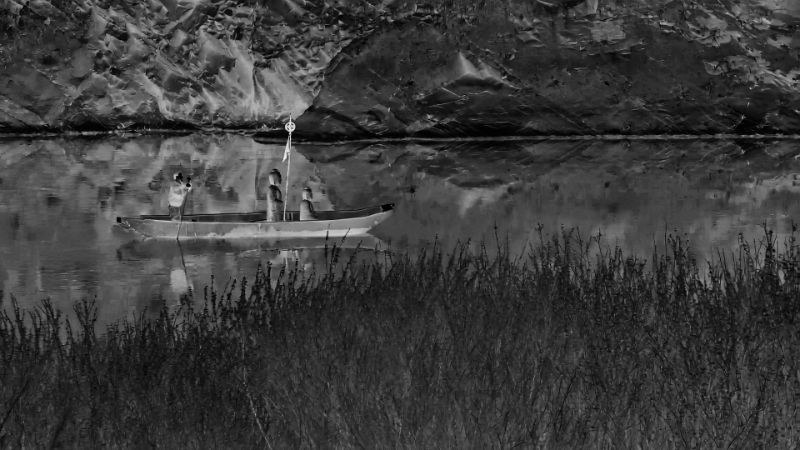
Q. There’s FM3’s Buddha Machine from Beijing, and there are the chanting machines sold at temples. How far were you involved in deciding the device’s design, speaker and playback method?
Kim: What I was involved in was pretty much just the color. The design coming out in silver, that’s about it. I only looked at one point. That it can’t skip. That was the most important thing.
Q. You did the music video with the artist Park Chan-kyong. I heard it was the label’s suggestion. How did you communicate with him?
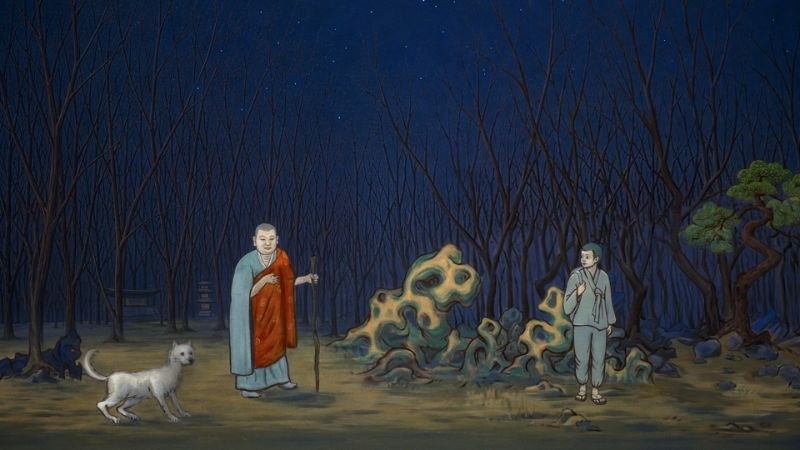
Kim: I haven’t met him in person yet. The label suggested, “How about working with Park Chan-kyong?” When I looked him up, his videos were so cool, and some of his works relate to Buddhism, so I said I’d love to. The label handled communication, and when we sent him the whole finished 26-minute audio, he sent back a draft video.
Seeing it, there wasn’t much for me to touch. I don’t know whether it was truly the first draft or a draft the label had received once and refined, but in any case, when I first saw it there was almost nothing to give feedback on.

Q. It seems nobody has asked about the cover yet. How was the cover made?
Kim: For the cover, while we were doing the song camp on Jeju Island and the album was gradually coming together, the four of us naturally started talking about the cover. Jongbin, Dohun and I are all really into design, so we all know how to do a bit of it. Illustration, Photoshop.
So saying, “Want to try doing the cover?” we spent a little time each making covers, and just while playing around, a whole row of candidates came out. The label liked them, picked one, and that’s how it happened.
"With a kick, you feel towed along"
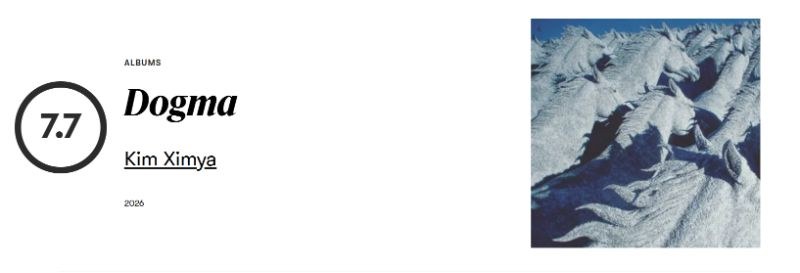
Q. Around [Dog], you said you tried to sample Buddhist music the way Kanye samples gospel, and failed. Pitchfork’s review wrote that “Me Life & Nothing Else” has a sample that sounds like a Buddhist chant. Is that right?
Kim: That’s right. But I don’t think I’ve succeeded yet.
Q. So there’s a level you’re aiming for.
Kim: The Kanye-style gospel sampling I want is where the gospel itself plays the role of a sample at the level of the song’s true main melody. But the Buddhist chant in “Me Life & Nothing Else,” as I feel it, stands in for the role noise or ambience would play, so it isn’t working as the main source. I still need to research it more.
Q. Around [w18c], you said producing came to feel like a kind of meditation. Is there anything you learned then that carried over to this album?
Kim: It doesn’t stand out much on this album, but what I keep researching is how to use my voice. Is there another way besides just laying it down in four bars, eight bars, like rap usually does? [w18c] was where I experimented with that.
[Dogma] does have “HDI,” but that’s a very commonly used approach. So I think I keep researching in that direction.
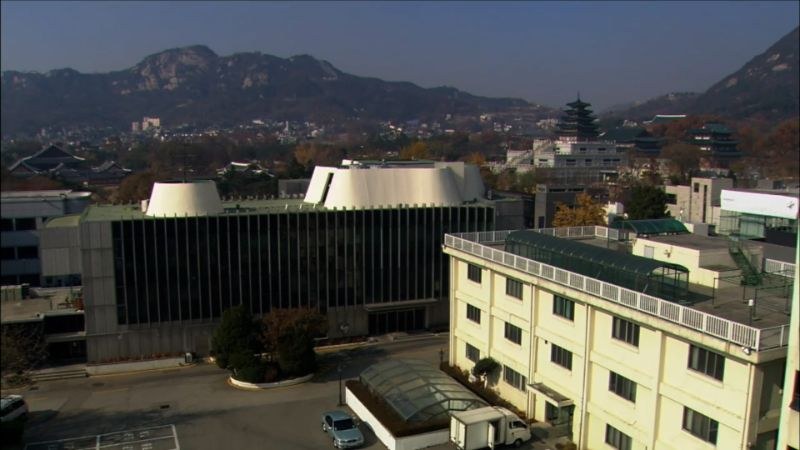
Q. In the [LANGUAGE] days you wrote long passages in Korean, but this time the sentences are short and repetition has become the body of the songs. How do you write lyrics these days?
Kim: I’ve always tried to write as much as possible from everyday life, nothing forced. Lately I’ve been studying the Buddha’s philosophy, so conversations with myself take up a big share, and that’s what the lyrics are about. I always write about things I’ve discovered about myself.
So compared to the past I definitely have less to say, and since I’m always looking inward, I’m not very interested in what noisy things are happening outside, and I think that’s how the lyrics turned out.
Q. Can we see the repetition in the lyrics as a kind of practice too?
Kim: That’s right. Honestly, whether it’s meditation or studying philosophy, it’s quite painful for me. I don’t do it because it’s fun; it’s really hard, but I do it because I still want to study. Among the things I can use musically for that, repetition is the biggest.
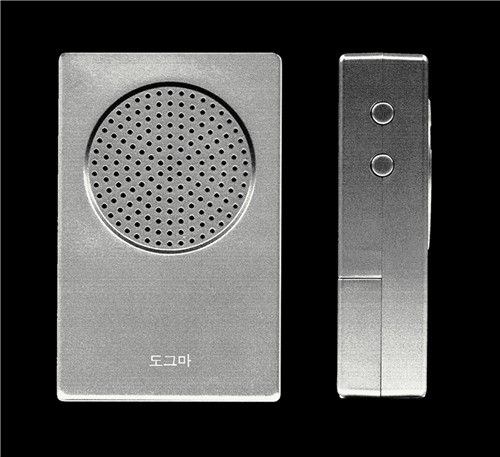
Q. This device, the chanting machine and techno all loop endlessly. For you, is the repetition of a kick drum the same as the repetition of counting breaths? If they’re different, where do they split?
Kim: With a kick, you definitely feel towed along. Someone is counting the beat for you, so you just follow it. But sometimes you notice your breathing, or count by the movement of your belly. With those, you have to control it yourself, so it feels like it takes much more effort.
So for listening on the physical player, I think I wanted to create an experience somewhere in between. Parts that are repetitive, but also parts with no drums at all. Because you want to consume music, not suddenly meditate, right? So I can’t go all the way like that, but it has a slight feel of it.
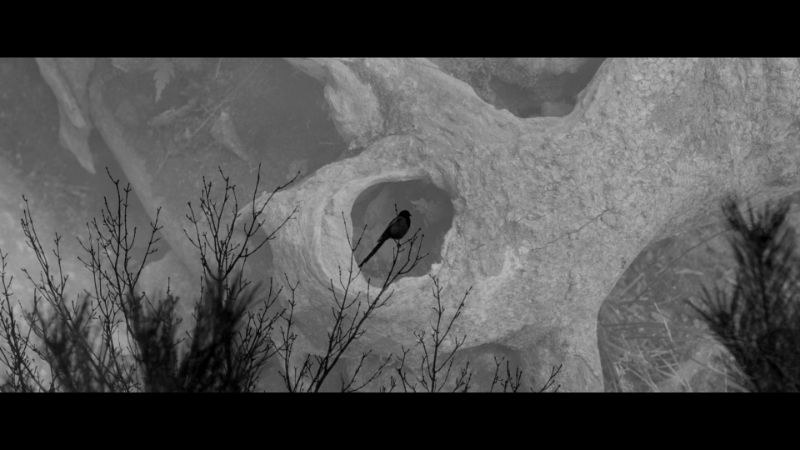
Q. You said you had a really hard time sequencing the songs on the device. Was that because you were matching the point where a meditation device and music meet?
Kim: That’s right. When people talk about meditation, there’s a state they call trance. To get there… techno isn’t repetitive for nothing. Only that way can you have the experience where, even though music is clearly playing, at some point the music is erased and only you remain. That really takes that much repetition, but I didn’t want to go that far, and I didn’t want to not do it either, so I tried to find something in between.
Q. Were the device-only songs that aren’t on the album planned for the device from the start?
Kim: When you think about it, the 26 minutes on the player could have been used as the album. Rather than “We’re doing a player, so let’s make this,” I think it was closer to, we were making these things, and then it seemed better to release them on the player. In terms of order, the music came a little first.
Q. You said you practice keeping the sword of anger in its sheath and drawing it only when needed. Was there a moment you drew that sword while making this album?
Kim: I don’t think there was, almost. The sharper words on [Dogma] are mostly lyrics I wrote long ago, and with the ones I wrote recently, those feelings didn’t really come up even while writing. I think I can control it well now, and it’s gotten a lot better.
Q. The device songs have quite a few sharp lyrics. Is that where you drew the sword?
Kim: Those lyrics are also ones I wrote in the past. And sometimes the sword does slip out, but when it does, I don’t force it back in; if it’s out, I figure I should cut something. It’s just that what I cut has changed.
In the past I picked a target and swung based on things like envy, jealousy and greed, but now I’m not swayed by those feelings as much as before, so even when I cut, I think what matters is exactly why and for what. Swinging the sword with reason intact. Whereas in the past I lost my reason and just went at it.
"Now it's my friends who stop me"
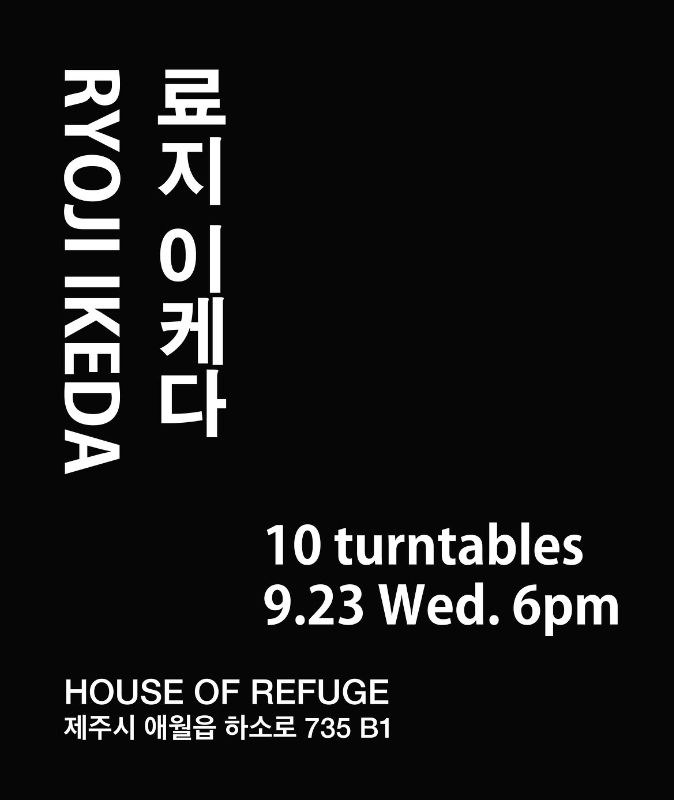
Q. On September 23, at the opening party for Ryoji Ikeda’s exhibition at House of Refuge in Jeju, you took the stage as XXX for the first time in a long while. How long had it been since the two of you were on one stage?
Kim: At least six years, I think. It had been a really long time.
Q. I’m curious how that night’s show stayed with you.
Kim: It was really strange. It felt like I’d suddenly gone back to when I was young, and since I’d done a lot of shows alone until recently, I also thought, “Right, it used to feel this reassuring.”
Back when the two of us were touring a lot, sometimes while performing we’d fall into sync and ride the rhythm together, and it had been so long that it just felt really strange. It was a really warm, fuzzy feeling.
Q. Did FRNK say anything after hearing [Dogma]?
Kim: He said he really enjoyed it, and that it was great to see what direction I’ve grown in and where I want to go.
Q. In another interview you said, “So it was really because of me, not because of Jinsu hyung.” Was there a moment, working without FRNK this time, when you confirmed that?
Kim: Still, in the end, where Jinsu hyung used to stop us when we were going too far, now it’s my friends who stop me. So I think my thinking has changed completely.
In the old days the urge to do all of it myself was really strong and my ambition was huge, but now, more than that, I want more in the direction of how far we can go making music happily and joyfully, how many people we can do it with, how far we can go.
Q. This album seemed closer to something made by getting together and enjoying it.
Kim: I think that was really important. I don’t know how it was for Jinsu hyung or others, but in the past I feel I made music without really enjoying it. Swinging around, obsessing over results, having to go further, having to do better, I was too tied up in that.
But this time, working starting with the Europe camp, I really felt I just wanted to do it joyfully. That’s why the Jeju camp went the way it did too, and it really was a lot of fun, and I think that’s how it turned out.
Q. On one broadcast you said the you of ten years ago would have called this album “it’s lost its yama, it’s just a shell.” If you showed that guy how you work now, what do you think he’d say?
Kim: He wouldn’t understand. And calling it an album without yama, the bite, is in the end closer to the content than the sound. I think it’s an album missing the attitude of a typical rapper. So the old me would probably have said, “The beats are good, but what’s with the content of this rap?” Because there isn’t much in it trying to kill anything.
Q. cjb95, ccr, Mount XLR. If you were to name one thing each of them left on this album?
Kim: First, what ccr left is definitely yama. Not in content, but yama in sound, in texture. ccr himself is just a lump of yama, so I think that’s in there. cjb95 definitely didn’t lose the hip-hop element and hid it away just right. And Mount XLR, in the new direction I’m heading, I think presents with me the sense that “this is where we start from.”
Q. You said you collect LPs but don’t listen on LP. When someone who bought this device swaps in new batteries five years from now and plays it again, what experience do you hope they have?
Kim: In the end, I think it’s the experience of meeting yourself. Studying and practicing, I’ve found that whatever I do, in the end I’m looking at myself. The reason it no longer matters to me whether listeners understand my intention in the music I make is that, when I consume art too, what that person intended doesn’t matter.
What matters, I think, is how I interpreted it. I think the interpretation I made tells me who I am. So since all of it is a process of finding out who I am….
Q. [Dogma] came out as a device, a music video and digitally. Can we take that to mean: listen in whatever way suits you at the time, and find yourself?
Kim: First, with the player and the video, the video itself and the player itself matter more than the music. For me, I’d like the music to be erased even while watching the video. As you watch, you’re just off with yourself, thinking about something else. With the player too, if you put it on quietly alone and listen, at some point you’re thinking about something else, and I think that closely resembles meditation and is an important point.
And the digital version, well, I have to be active and make money too. Still, I released it in a way that’s fun and good.
Q. Lastly, is there anything you’d like to tell people who bought the album as a device, before they put the batteries in?
Kim: First, I should probably tell them the batteries are sold separately. And that you don’t have to try too hard to understand it. Just put it on, and all the emotions you feel from it simply playing… I didn’t intend those exact emotions, but I wanted to create a situation where you just put it on, think all sorts of things, and face yourself alone.
So you don’t need to understand it too much, you don’t need to get angry if you don’t understand it, and you don’t need to show off if you understand it too well. That’s how I see it.
Words: Choi Seungin (Gaeda)