

Good musicians have good producers beside them. This past August, the five records that stirred the hearts of black-music fans were all like that. Beside each voice stood a producer. It’s nothing new. R&B and soul were music of pairs to begin with. Motown had Holland-Dozier-Holland, Stax had Booker T. & the M.G.’s, Philadelphia had Gamble and Huff. And neo-soul had the Soulquarians, a collective Erykah Badu was part of. In 2000, [Mama’s Gun] came out of there. Even an album that seems to stand on a single voice alone was, in truth, shaped into its present form by someone’s hands.
All five are the result of a musician and a producer finding their fit, but the places that fit arrived at are entirely different from one another. Some pairs took the voice apart and turned it into texture; others let the voice step back behind the rhythm. Follow who was beside them, and you’ll see where each of them wanted to take that voice.
Erykah Badu & The Alchemist [Before the World Blows]
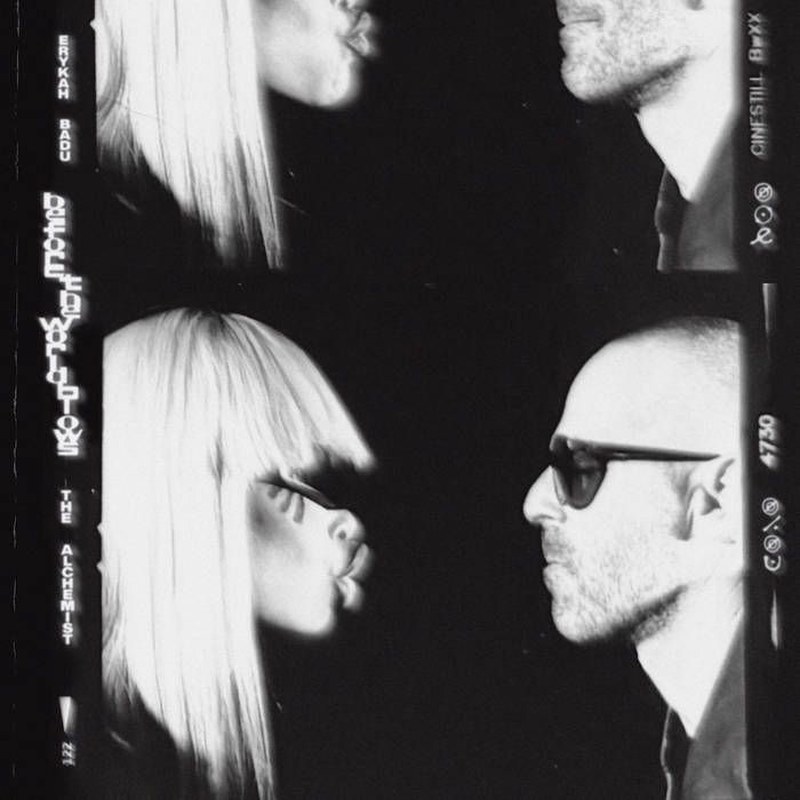
It began with a single beat from 1999. Over the track the Alchemist had made for Mobb Deep’s ‘The Realest,’ Erykah Badu said she’d like to lay her own voice someday. Cold Chris, who had worked with both, picked up on that three years ago and connected the two, and ‘Next 2 U’ was made at a studio in LA. A song built on a 1999 beat is the album’s starting point. They then recorded over 18 months, going back and forth between Dallas and Los Angeles. And so, on August 28, 2026, a first studio album in 16 years — since 2010’s [New Amerykah Part Two (Return of the Ankh)] — arrived.
Of course, those 16 years weren’t wholly silent for Erykah Badu. There was the 2015 mixtape [But You Caint Use My Phone], and she kept taking the stage as a DJ and producer. This album’s release, in fact, was pushed back about a year from its planned August 2025 date. It wasn’t so much that something came up as that there was no intention to rush. Erykah Badu’s own words: “It’s not a race, and it’s not something to rush.” Instead, the two put the album’s music on stage first. That August, on the ‘Abi & Alan’ tour, they played the unreleased album in full, and the audience that day had to put their phones into locked pouches to enter.
Maybe that’s why the two roles aren’t easily told apart. Badu took the loops the Alchemist sent and pulled them apart and rebuilt them — layering kalimba and chords and drums, until each song became fully her own. It’s why both names appear side by side in the credits of most of the tracks. The Alchemist said he “did exactly as much as the song needed and stepped aside — so the lyrics, the meaning, could come through.” As a result, voices stack layer upon layer over dusty loops and mellotron. One outlet wrote that this friction “makes the two stranger, warmer, and freer.”
The featuring lineup is wide but not scattered. Westside Gunn and Earl Sweatshirt, Steve Lacy and Thundercat, and Kamasi Washington at the album’s close. Underground hip-hop, jazz, and neo-soul are mixed into one roster, and the percussion of DJ Quik — a legendary West Coast hip-hop producer left off the credits — is laid throughout. The official lead single ‘Witch Doctor’ is a track that lingers long in one place, revisiting her mystical self; Badu directed the music video herself.
Being a long album, it isn’t easy to get through in one sitting. And yet it’s persuasive. What the person who waited 16 years put out is not a finished monument but someone still working on herself and her music. One critic’s sentence pins it exactly: “A curious, vividly unfinished Badu suits this moment more than a legacy artist keeping the past behind glass.” Above all, there’s no trace of haste in this album. Which also means there was someone beside her willing to wait that long.
Alabama Shakes [I Must Be Dreaming]
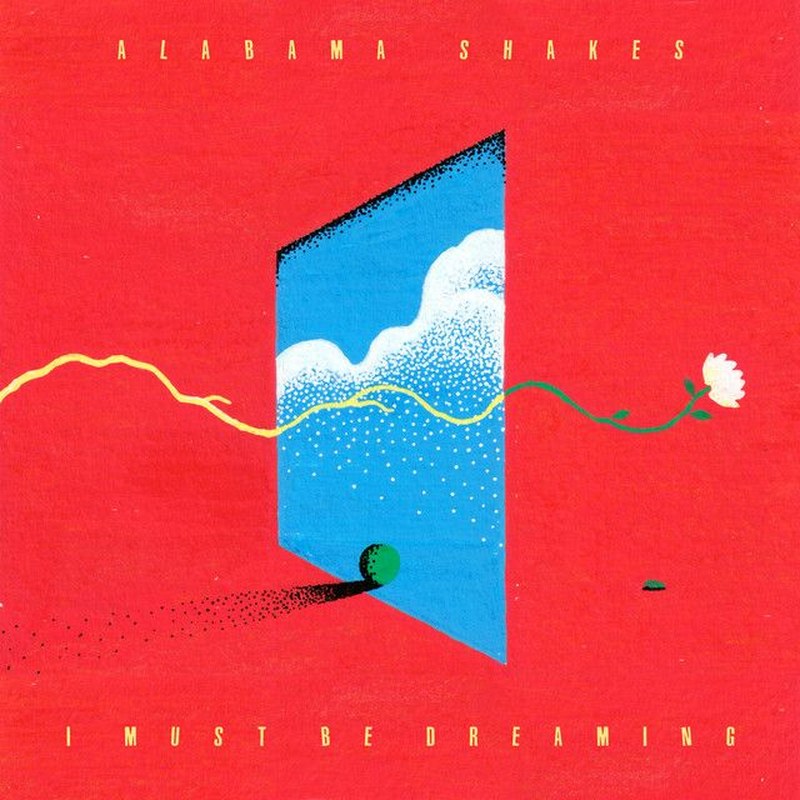
If the Alchemist was beside Badu, Shawn Everett was beside Alabama Shakes. The members, meanwhile, had gone from four to three. In December 2024, Alabama Shakes took a stage in Tuscaloosa, Alabama, with no warning. Having not performed since 2017, it had been more than seven years. The next year they made new music official, and so [I Must Be Dreaming] arrived on August 28. It had been 11 years since 2015’s [Sound & Color].
In between, Brittany Howard released two solo records. 2019’s [Jaime], 2024’s [What Now]. Two records made without the band, and their traces are heard on this album too. The lineup changed as well. With founding drummer Steve Johnson leaving the team in 2021, Alabama Shakes is now led by three — Howard, guitarist Heath Fogg, and bassist Zac Cockrell. Which means this is the first Alabama Shakes album made without a drummer.
It was recorded at Sound Emporium and Blackbird Studio in Nashville, and produced by Shawn Everett together with the band. They aren’t strangers, in fact. Eleven years ago, on [Sound & Color], he handled the mixing and engineering and won the Grammy for Best Engineered Album. The person who once shaped the sound now has his name on it as producer.
From the opener ‘Tea Time’ to the closer ‘Tied to You,’ the grain of the sound is close to a richly textured psychedelic soul. One critic called it “a psychedelia that never loses consciousness,” and wrote of Howard’s vocals that they are “fierce yet breath-like, distant yet, in the end, vividly there.” Three singles came first: ‘Another Life’ in August 2025, ‘American Dream’ in April 2026, and ‘I Feel Hope Coming’ in July. Of that last song, Howard spoke of hope for a next generation that will see through political lies.
On the title, Howard explained there are two layers of meaning. It means the world seems to be going mad, and at the same time that it is still unbelievably beautiful. The album sounds that way too. It was also the most warmly received by critics of the five, with many calling it a comeback that opened new ground. You might ask why a rock band’s album is here. But whatever the genre says, the place Brittany Howard returned to after 11 years is soul.
Cleo Sol [Gentlewoman]
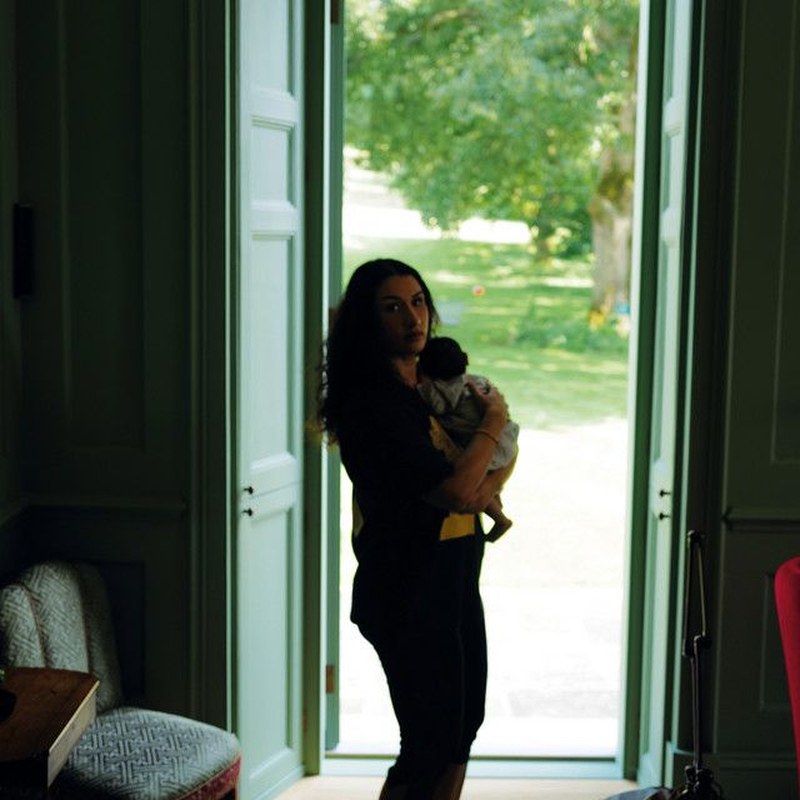
If Alabama Shakes had, beside them, members working with Shawn Everett, Cleo Sol has just one person beside her. On August 20, her fifth studio album came out. Almost without anyone noticing. That’s not an exaggeration. Long after release, press reviews of this album could be counted on one hand. No interviews, no large campaign, no marketing. This is her stance, really. Forever Living Originals, the label she belongs to, is one that hardly promotes, and SAULT, the band she fronts as vocalist, has kept both performances and interviews to a minimum.
Born in 1990 in Ladbroke Grove, London, Cleo Sol grew up in a musical household in Notting Hill, to a Serbian-Spanish mother and a Jamaican father. She first appeared on Tinie Tempah’s ‘Tears’ in 2008, then took a break from music from 2012 to 2017. What came after her return is well known. Little Simz’s ‘Selfish’ (2019) and ‘Woman’ (2021), several SAULT albums, and from Rose in the Dark through Mother to [Heaven] and Gold, two of which came out the same year. She made music under the influence of Stevie Wonder and Jill Scott, and Erykah Badu. Erykah Badu’s name comes up here again.
On [Gentlewoman], the only person credited as producer is Inflo. The man who leads SAULT, and her husband. The writing credits, though, are a little different. Names like Chronixx, Dave Okumu, and Rick Nowels appear alongside. One person produced; the songs were written by several. It opens with ‘I Only Look To You’ and closes with ‘Gentlewoman (Acknowledgement),’ and in between sit titles like ‘Force Of Love,’ ‘Let Me Cry,’ ‘Family Ties,’ ‘Their Smiles Are Not The Same,’ ‘Honest Talk,’ ‘All Because Of Love,’ ‘Thank You,’ and ‘Little Things.’ Just skimming the list, you can guess where the album is headed. She explained it herself: a record about finding strength from an honest place, passing through life and its trials. Better days will come, and through the ups and downs, love remains.
With one producer, the sound gathers to one side, too. Not everyone finds that sound comfortable, though. One critic wrote, “perhaps the safety and steadiness of the arrangements suffocate me rather than console me.” It’s music that never raises its voice from start to finish, so that’s understandable. Yet the listeners’ reaction is the opposite. Those who actually listened and left a word rate it far higher. Quiet among critics, but not so on the listening side. Perhaps Cleo Sol wanted exactly that from the beginning.
Jorja Smith [What Are The Odds]
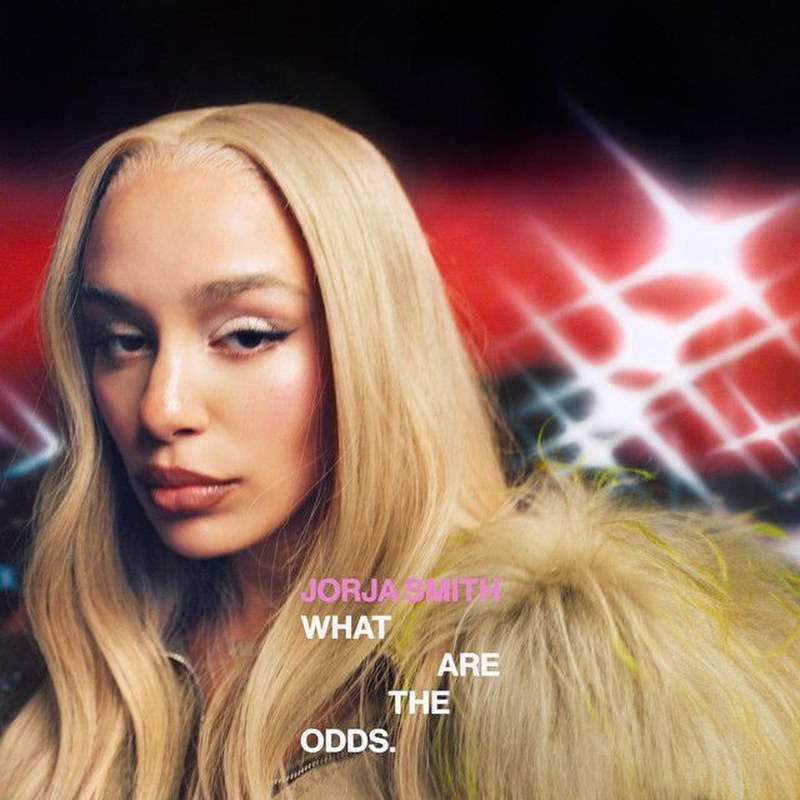
If Inflo, beside Cleo Sol, turned the sound inward, P2J, beside Jorja Smith, opened it outward. On August 21, the day after Cleo Sol’s album came out, Jorja Smith took the stage at All Points East in London’s Victoria Park. It was the day she stood as the festival’s sole co-headliner alongside Tems, and the same day her third studio album [What Are The Odds] came out. On the day she took the stage, she put out an album full of dance sound. It doesn’t look like a coincidence.
It’s the shortest and fastest of the five. The label is FAMM, with her since the debut, and the producer of the twelve songs is P2J, who has come through Beyoncé and FKA twigs. The starting point was ‘Little Things’ from the previous album [Falling or Flying]. That one song, co-produced by P2J, is where this album’s direction first emerged. The list of sounds is UK garage and grime, 2-step, UK funky, soulful house, Afro house. Jorja Smith herself explained, “This is music that makes you move. It’s a record for driving, for getting hyped.”
This choice isn’t sudden. Born in 1997 in Walsall, West Midlands, what introduced her to the world was the January 2016 debut single ‘Blue Lights,’ a track that took from Dizzee Rascal’s ‘Sirens.’ From her debut song, she was pulling from the urban sound of British black music. This album’s ‘This City’ is like that too. The grime rapper Devlin took part, re-recording a verse from his own 2010 song ‘London City’ over it. The lead single ‘Alive’ features Wizkid.
Of course, dance music doesn’t mean the lyrics got lighter, too. The album deals with friendship with a friend battling addiction, betrayal, being placed before people, loneliness, and the process of coming to know oneself. So this album didn’t run from story and narrative; it set the two side by side. It’s an album where the story keeps going even as the feet, the body, move.
The critics’ response was good. It drew calls of Smith’s best work, and phrases like an artist at the peak of her powers. Because she moves freely, as if delighted, between UKG and funky, house, and 2-step. The listeners’ response, on the other hand, didn’t quite follow to the same degree. There was no shortage of remarks that it lacked cohesion or that the vocal presence had thinned. But one thing is clear. Jorja Smith made it knowing it was an album that doesn’t push her vocals to the front. A producer she’d worked with for a long time was beside her.
Ravyn Lenae [Blue Island]
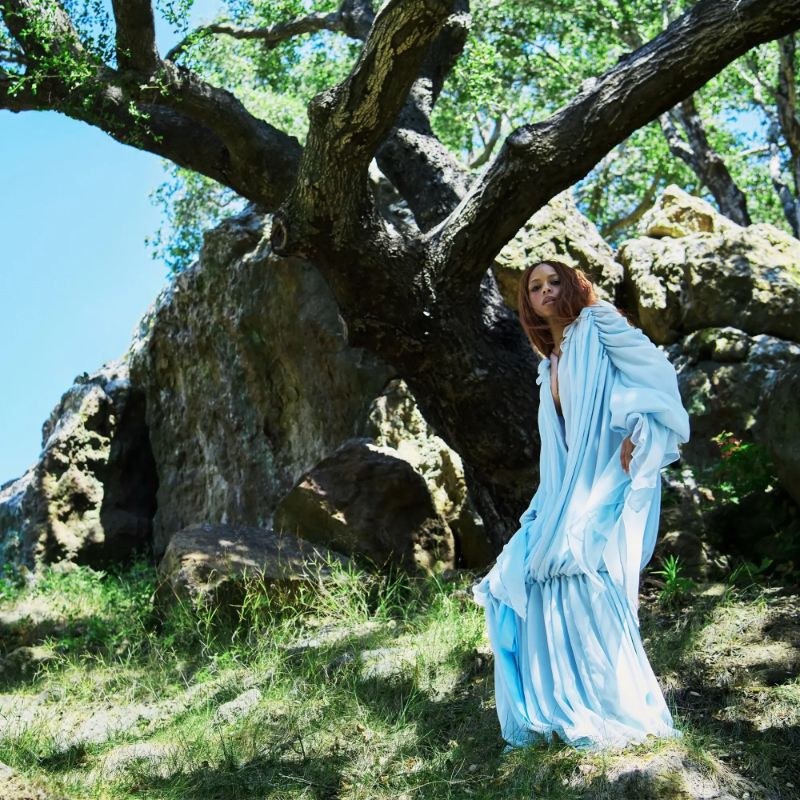
The four before had one person beside them. The last one is a little different. Ravyn Lenae’s third studio album has more than ten producers credited. Released on August 7, it was the first to come out of the five introduced here.
Ravyn Lenae was born in January 1999 in Chicago. She studied classical music at the Chicago High School for the Arts, and began her career as part of the Zero Fatigue crew, home to Smino and Monte Booker. Her name becoming widely known is a relatively recent thing. ‘Love Me Not,’ released in May 2024 as the lead single of [Bird’s Eye], was quiet for a while, but in October that year a TikTok user posted a mashup mixing it with Solange’s ‘Losing You,’ and the current shifted. That reaction spread most widely the following January, and the song climbed to No. 5 on the Billboard Hot 100. A hit that came late.
[Blue Island] arrived a year and a half after that hit. Released on Atlantic Records, it credits names including No I.D., Ely Rise, Flanafi, Karriem Riggins, and Saya Gray. The one who tied this roster together in one place is executive producer DJ Dahi. They go back a long way, too. Of the single ‘Handle,’ Ravyn Lenae said, “We wanted to push the needle a little further. We wanted it a bit more raucous, louder, a little aggressive.” The subject is “we.” Four singles came first, starting with ‘Reputation’ and ‘Bobby’ on April 3, then ‘Handle’ on May 28 and ‘Saturday Night’ on June 26. ‘Babygirl’ features Doechii.
When there are many producers, the sound tends to scatter, but this album doesn’t hide that scattering. Each time the genre changes, the place the voice stands changes too. Indie pop and alternative R&B, soft rock, and the soul of the past coexist naturally within one album, as the reviews put it. Some pointed to a velvety-textured production leaning on the 1980s. There were more blunt expressions, too: that it charges in aiming for pop’s crown.
Her own explanation, though, isn’t the crown. Ravyn Lenae calls this album a point of arrival for her identity, saying she wanted to challenge the conventions of R&B and pop and make it her own way. And she added one sentence: that it’s a place free from any preconception about Blackness.
Of course, not everyone agrees. There were reviews saying the bold production doesn’t quite cover the album’s hesitation. An album where praise and regret sit side by side. Whatever the verdict, once you pass through the five in turn, one thing becomes clear. No voice arrived alone. Ravyn Lenae says she stood at the point of arrival of her identity at twenty-seven, but even at that point of arrival more than ten names are written alongside. What makes black music black music? At the very least it isn’t decided alone — so say the five records of this past August.